Tuesday, 20 March 2012

Photographic Reference - Cyprus/Egypt II


St Louis Sails to Cyprus and thence to Egypt


Robert of Artois


The Siege of Damietta


The Siege of Damietta


The Emblem of Baybars Bundukari

By the Rivers of Babylon - Egypt Summer 1249

Extract from MS Paris.

And so the King of France, magnificent son of Christ came to the shores of Egypt, and assembled his army on the coast opposite the city of Damietta, which had been captured and held by the Franks in 1219 to 1221. The city was on the edge of a branch of the River Nile which flowed into the Mediterranean sea. A bridge of boats was quickly build by the army of God so that they might access the city and invest it properly. The Muslim defenders of the city sallied forth but were soon beaten back and forced to withdraw behind their walls. Lacking courage and the King of France having put the fear of the Lord into them, they commander fled and left behind only those who could not walk or flee. Upon his arrival before the Sultan’s court in Babylon he was beheaded for his cowardice and not defending the city appropriately. The King of France had great siege machines built and the walls and towers were battered by them so that they shook and some came close to falling. The King’s brother Robert of Artois, arrived in the camp from Cyprus and brought with him many men and supplies. Despite Bedouin attacks upon the camp of the army, and the death of many foragers and Templars who went out into the fields and woods, the army prepared to assault the city and claim it for Christendom once more.

Letter between Subject Roger de Clare to Subject Rathmonicus.

Since it may be of interest to you I have written below the matters that have occurred in the siege of the city of Damietta. Having arrived here, we set out and invested the city with siege machinery having built a bridge of boats to cross the Nile. The garrison did come out but were soon beaten back after a skirmish, and they thence fled, We have extended our siege works around the East and Southern sides of the city and will soon assault. Robert of Artois has now arrived with the remainder of our forces, so nothing remains to be done now. We have been under siege in our camp from foes of course. The vile Assamites have kidnapped and slain many of our ghouls and retainers, while the Gangrel of these lands make the moving of supplies difficult, but we have doubled our patrols and the Templars seem to ward them off with their faith. John de Montmorancy has lost many particularly, he may have to return to Cyprus to replenish supplies and troops for the shadow war that we play here. Pray for us for our fates are in Gods hands now. Our Setite allies continue to whisper into our ears. I would wipe them out as ready as the pagan mortals about us. I do not trust them, they are too eagre.
Roger de Clare
June 2nd 1249

Letter from Subject Binesh to Subject Jaffar.

Sire,
Our dearest Khalidah had now left the Island of Cyprus in the mighty vessel of her husband Andreas and is headed for the city of Damietta. She continues to lug around those reprobates she has the temerity to call coterie fellows. She is well by the sounds of it though and I believe she intends to make a call upon our brood in Tinnis, quite soon. A warm welcome id perhaps in order after some of her most recent successes. As for the campaign of the King of France, I urge that we stress the importance of capturing Alexandria after Damietta has fallen. The control of two branches of the Nile is integral to future success and the conquest of the entire country of Egypt. However the Franj are impetuous, they intend to focus on Mansourah and Cairo itself. Something has to be done otherwise it will be a repeat of the last attempt, and all will be for naught.
Binesh
June 3rd 1249

Letter to Unknown recipient from Subject Bilaal.

We managed to get to the city of Tinnis as intended , but I fear that all is not well in our land. The Amenti are stirring once more. Some of my companions followers were slain by a creature that rose from the sand at an oasis two days from here whilst gathering water for the camels. The creature then torpored two members of our party, one of them a Spanish Knight called Osias. Greater precautions must be taken lest any assault be launched against our Temple in the city. The creature dropped a small statuette of the Jackal god Anubis, I know not what this means though, it is a matter for our sorcerers to consider who are wiser in these things than I. Fortunately we encountered a regiment of some CC Mamlukes under the command of a Commander Baybars Bundukari. His presence and those of his troops I believe discouraged any further attacks on our caravan.
Bilaal
June 8th 1249

Thursday, 23 February 2012

Photographic Reference - Cyprus/Egypt I


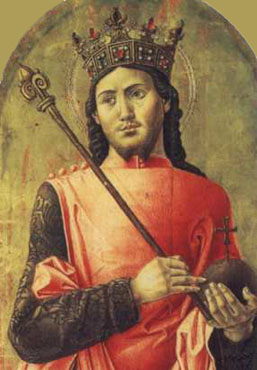
St. Louis, King Louis IX of France


A Tournament


Louis IX Leading Crusaders to Damietta on the 7th Crusade


16th Century Piri Reis Map of Cyprus


The Coast of Arms of the Kings of Cyprus in the 13th Century

Wednesday, 1 February 2012

The Island of Love - Cyprus Summer 1249

Extracts from Manuscript BNF. 33762.1, here after referred to as MS Paris.
Upon the Island of Cyprus Louis IX of that name did gather his assembled army and took council with the many lords and bishops who had accompanied him from the Kingdom of France. There they were joined by the nobles of the Kingdom of Jerusalem and Cyprus. Gathered at the royal palace in Famagusta King Louis set out his plan for the invasion of Babylon and on how they were to defeat the Saracen. The masters of the Temple, Hospital and Germans came forward and gave their expert council on the matters. It was expected that the Emperor, Frederick would send both troops and money to aid the holy expedition. All supplies were gathered and made ready to be transported across to the shores of Egypt, A fleet of some DCCC had assembled, upon which men and horses were placed.

Letter 1 between Subject Jared and Subject Georgus Proteus.
My friend Bishop, may the Lord smile upon you. I urge some caution in the preparations for the upcoming departure of the fleet. While we place our lives in His and as He determines all, I still fear that the Assamites and other Cainites who worship those false idols may attempt to sabotage our efforts and sow panic amongst the ranks of the Kine. Word has come to me of various types who have been spotted observing the comings and goings of our various brethren. As such I have taken the liberty of increasing the patrols and ranging of my brothers of the Hospital in Famagusta, Paphos and Nicosia. The life of his majesty King Louis is of course of great importance to us and nothing will be allowed to happen to him. We do not wish to earn the enmity of the Courts of Love.
Jared
Brother of the Hospital
May 18th 1249

Proclamation 1 by Subject Rathmonicus.
Be it here known that the IV days hence a tournament shall be held in honour of his majesty the King of France and our brethren from the Courts of Love who have come to aid us in these dark and troubling times. The tournament will be held in the Hospitallers fields beyond the city of Famagusta. That place for all purposes shall be declared Elysium, though rules concerning violence are to be overlooked in the tourney itself. The tradition concerning final death is still to be upheld though. Be aware that there will be Kine in attendance and as such all Cainites should moderate their behaviour, both on and off the field. Any infractions as per the standing ordinances of Nehemiah will be dealt with swiftly and without mercy. All Cainites who enter the lists or melee are expected to provide their own arms. Only those Cainites of High status and pureblood may enter.
Rathmonicus
Seneschal of Famagusta
May 20th 1249

Proclamation 2 by Subject Rathmonicus.
Be it here known that in accordance with the trial laid down by Prince Nehemiah, Jean de Montmorency is recognised as our herald and jongleur. He has been awarded the victors crown as befits his station, and is now an officer of the Court.
Rathmonicus
Seneschal of Famagusta
May 21st 1249

Letter 1 between Subject Georgus Proteus and Subject Rathmonicus.

Seneschal, You know as well as I that the Holy Father in Rome has proclaimed that Tournaments are banned throughout Christendom for the damage to good men that they do, and because of the needless shedding of blood and promotion of violent ways. Man might be better served in the contemplation of the Divine, or by putting those martial skills to a good work in smiting the enemies of God. I fail to see how this ill advised tournament will bring any benefit to the army or its objectives in Egypt. I therefore ask that you, in accordance with the strictures given by the Church, to cease this foolishness immediately.
Georgus Proteus
Bishop of Paphos
May 22nd 1249


Extract from MS Paris.

There in the fields beyond the city walls many knights from the army did gather and compete in contests of arms against each other for the length of the day and into the night. Many gathered to see them, all in contravention to the laws that the Holy Father had laid down. King Louis himself took part, distinguishing himself admirably, though he did so under a false name so that none would know who he really was, lest they fear striking him or hold back in their efforts. The victors crown went to a Knight from Constantinople in the army by the name of Caius Pelagius.

Proclomation 3 by Subject Rathmonicus.

Be it known that the Knight of Constantinople, Caius Menius Pelagius, childer of Gaius Menius Pelagius has proven themselves champion through tests of skill at arms. In both the lists and the melee they stand victorious.
Rathmonicus
Seneschal of Famagusta
May 25th 1239

Letter 1 between subject Reynald and Subject Alexia.
Alexia, it seems that officers of the Holy Inquisition have arrived on the island are currently making a nuisance of themselves. Track these individuals down and see if they might be persuaded to leave. I find it curious that they should arrive here with no warning, and my contacts within the Church have certainly given no indication of their activities. I am suspicious, so I suggest you proceed with caution. Heresy may very well abound, the perfidious Greeks are not to be trusted after all, do not bring too much attention upon yourself. In regards to the arrival of those particular individuals whom you hold responsible for the failure in Magdeburg, I suggest that you let it go. Matters have progressed beyond Jervais’s initial objectives. Little will come of this. The Tzimice is alone, there are more opportunites in Egypt, it is there we must focus our attentions. Do not be distracted from the higher goal by petty rivalries. We Tremere are above the other Clans in such things.
Reynald de Montdieu
Regent of Limassol Chantry.
May 29th 1249

Tuesday, 31 January 2012

The Cross and Crescent - Cordoba Winter/Spring 1237

From the journal of Xavier Hugo of Clan Cappadocian; Cordoba, February 1237
My studies continue to be distracted. That is not to say that my time in the abandoned library of the Qabilat Al Mawt has not been both well spent and educational - I have, indeed, learned much. But politics distracts, as it has a way of doing.

We have made a new 'friend', a Muslim Assamite - excuse me, one of the Banu Haqim - named Rashid, apparently sent to help us deal with our Junius problem. He seems both sane and useful thus far, if a little distracted with the sky. He even helped us attack Viktor Nagy, thus taking the first step to joining the blood-drenched insanity that is our little coterie. I almost pity him.

Speaking of Nagy, Gaius has apparently buried him somewhere - I would not be surprised if Gaius acquires some more black marks in his aura soon enough. And he has cunningly lured Giacomo Di Giovanni out of the city for a while, which means that the Table of Solomon should be safe, for a while - until we have dealt with Junius, at least.

Junius, now - there's an insoluble problem. So little is known about him. Alvar knows that this war is built on a personal vendetta, but apparently lacks the power or the inclination to do anything about it. Even the Nosferatu and the Setites are at a loss to provide us with useful information. It would seem our options are quickly becoming severely limited; yet more murder may be the only path. It is distasteful, but a Cappadocian should never be afraid of death - not someone else's, at any rate. I wonder, though, what will happen to him; it does seem a shame to let vitae of such power go to waste.

No! What foolishness am I thinking? Removing a soul from the black road entirely. Still, I do wonder how it would feel, and what would be the effect? It is not the first time I have wondered about the... extent of the consumed soul's destruction. I suppose we shall have to see.

And Khalidah. Khalidah! If not for her, I would be as calm and contained and wise as any elder of the Cappadocian scholars. Every word I say, she dismisses; every problem I point out, she claims I am negative; every idea I voice, she claims I am foolish! And when she brings out my beast, I am the attacker, and when I bring out hers, she is justified! Her devotion to chaos irks me.

I think I shall have hot bath and meditate on a few things.

Xavier Hugo


Letter 7 between Subject Lucita of Aragon and Subject Ambrosio Luis Moncada

Sire, All has gone well, the resources were received and dealt with appropriately. Some concern has been caused but I do believe these will be overcome soon enough. Various redevelopments are occurring here, this will not last long. Once all the resources have been collated here things will inevitably quite down. How long Junius will remain I am not sure. There are murmurings against him.

Lucita of Aragon,

March 3rd 1237

Extract from MS Lyon

The great adversary walked the streets of Cordoba, while stone masons began to work on converting the Mezquita to a Cathedral and House of the Lord once more. In response to this, spurred on by Satan and his demons, did rise up against good god fearing individuals. Many a brother monk and priest lost their lives in those nights. Their bodies found floating in the river and their heads left in the market places for all to see. The barons of the land searched high and low for the perpetrators of this crime, but none were found. In the wilderness outside the city bandits did prowl the woods, causing great harm to travelers and merchants. Knights of the Cid, who were travelling the roads between cities were set upon by them, and did put them to the sword.


Letter 1 between Subject Hanif and Subject Naima

Naima, Great Set! Is this really it? Im not sure how you got hold of this but if its true then the world certainly seems to have a sense of irony. Do many other know of this, assumedly not otherwise Junius would have met with a bloodhunt and final death long ago. Was this from Rasmi, surely she is one of the few who could know of such details. This information will fetch a high price from Gaius and his associates. I suggest we choose careful in candidates, matters will conclude soon enough once this is out. We must play this well.

Hanif
March 10th 1237


Letter 8 between Subject Lucita of Aragon and Subject Ambrosio Luis Moncada

Sire, I am unsure if this matter should concern you but I feel that if business is to continue in this city that such rumours and gossip should not be flippantly ignored. Apparently the fools Xavier Hugo and Gaius Menius Pelagius have unleashed a daemon upon the city. Allegedly it was kept bound beneath the Mezquita, and it deceived them with its Hellish wiles.

Lucita of Aragon
March 14th 1237

Letter 2 between Subject Alvar and Ferdinand of Navarre

I hope this missive finds you well. Further correspondence should be arriving with you shortly, dispatched by Cainites here in the city, Gaius Menius Pelagius, Xavier Hugo and Osias. Be sure to keep these documents safe, you will understand immediately upon reading them why they are of grave importance and a delicate nature. If news should reach you about my fate, if is an unhappy one, then I trust you and your brethren to decide wisely upon the matter, and take a course of action that is appropriate and just.

Alvar
Prince of Cordoba
March 17th 1237


Proclamation 7 by Subject Alvar

Be it known that the Cainite known as Junius, of Clan Ventrue is hereby condemned for his crimes to final death, he is blood hunted immediately. All who assist him or aid him will meet a similar fate. Thus is the fate of all traitors and apostates. Junius knowingly and willingly aided the conquest of this city some D years ago when the infidel first came to these lands. He betrayed his brethren and his fellow Christians and cursed them the foul fate of Diablerie. For this, he shall perish. Nobody escapes their past. Punishment, divine in its accordance, will be meted out eventually to all sinners, in accordance with His will.

Alvar
Prince of Cordoba
March 20th 1237


Extract from the Corespondence of Gaius Menas Pelagius

Most Esteemed Sire,
As previously reported the project in Cordova is going well. While as previously mentioned I have had to take measures to store our books in safe locations due to the previous assaults on the abbey, I have managed to acquire and have immediately set about copying the books that the Order requested, currently I am helping the Cappadocian Xavier Hugo guard the library after the unfortunate deaths of the previous attendants and this has given me unprecedented access to this repository of knowledge. While it of course does not even come close to rivalling the Library of the Forgotten, I have discovered many accounts that will be of interest to yourself and others within the order. While this access will only be temporary I believe, as Jacim will eventually return from his business outside the city, I will do my best to acquire copies of any other books that yourself and the Elders should wish to add to our vast collections and will do my best to add anything I discover to our collection here in Cordova.
Of interest is the manner in which the inhabitants of the library perished, Xavier Hugo discovered the entirety of the library staff some twelve individuals and a Cappadocian dead in their seats, entirely still and seemingly half way through their duties, drained of blood without a fang mark except in the case of Rafi who had been seemingly diablerised. The individual we discovered later in the library was not the Tremere as we suspected, but an Assamite with pitch black skin, grey hair and entirely white eyes who ignored us despite our attempts to communicate with him, he searched throughout the library until eventually he found a tome in which a certain passage was written. He read this passage, scrunched it up, and then left. All the while entirely silent. I have included this passage within my missive for yourself and the Elders to analyse.
There is another matter of import that should interest the Elders, the Tremere have recently lost their foothold within the city with the disappearance of Victor Nage, given the current turmoil and Prince Alvars need for support, especially from a politically distant faction such as ourselves and the lack of a Tremere chantry or strong hold, I suggest that the Obertus should immediately capitalise on the matter. I understand the difficulties of travel for our kin, and I am willing to acquire permission from Alvar and yourselves to embrace should it be necessary, however I urge that we take advantage of this opportunity to create a stronghold of our clan within Europe and increase our power.
While my faith remains strong as ever my Sire, despite the repeated assaults from my companions on our practices and religion, you will be proud to know that despite the regretful necessity of violence on several occasions I have not fallen to sin or vice for quite some time despite the attempts of the Setite to lead me into sin or heresy. While I find these assaults taxing as always, I have managed to remain strong, reminded of my previous failings. However the matter that troubles me is the necessities to which I have gone, as you know I do not relish killing, even if it is an inevitability of our state, but as I mentioned some months hence the deaths of gods chosen inquisitors by my hand has troubled me. I feel that my grip upon my humanity and the struggle with the beast within is slipping, and I am troubled, should I be combating the servants of God out of my selfish need to survive? Is my continued existence part of the divine plan. I have contemplated this issue and have yet to come up with a conclusive answer, and I know that this necessity may arrive again. I have began considering a shift to another philosophical road, of course, I will need to spend many months in contemplation of this shift, and I will when I return to the Obertus stronghold in some years hence discuss the matter with yourself and others within the clan.
God Bless,
Your Childer,
Gaius Menas Pelagius of the Obertus


Extract from the Memoirs of Xavier Hugo, Clan Cappadocian.

That was the end of the excitement in Cordoba. I stayed for almost two years afterwards, of course, availing myself of the Cappadocian libraries. I spent many enjoyable evenings with Nahmanides, and with Osaiis, and even with our new companion Rashid, discussing matters of religion, philosophy, and mathematics. I even read my way through the complete Al-Tasrif, and penned myself a copy.

Inevitably, however, I grew nostalgic for my town house in Carcassone. In the Summer of 1239, I began to set my affairs in order: I officially resigned my control over the Feifdom, citing the great work of my clan calling me away, and left it in the hands of Gaius and Osaiis; I turned over control of the Businessman's Guild to a bright young wool merchant named Thomas; and I sold the bathhouse for a tidy profit (then again, I had paid nothing for it). I felt, I suppose, that I had exhausted the possibilities of that city; Rafi was always the more welcoming of my clan within the city, and although Jakeem granted me access to the libraries, he did not seem particularly willing to talk. In the Autumn of 1239, I returned to that place I had come to think of as my home.

My town house in Carcassone had been taken over by paupers when I returned, but they were easy to remove; one or two of the healthier specimens I even adopted into my small retinue, for many of my feeding vessels were growing older, and the old do not always survive when one feeds on them. By mid-winter, I was again well established and my studies - with Irenie's guidance, as ever - began in earnest.

I performed a number of experiments in the following years - what one of the slow, torpid elders would consider a veritable flurry of activity. The Al-Tasrif had been a genuine education in the arts of medicine and physiology, and I spent many interesting evenings pouring over the remains of the recently dead, documenting the form and structure of the body and the mechanics of the processes of decay. If I had had any reservations about dealing with dead flesh before, I lost them on those long evenings.

Another of my favoured experiments grew out of a time of self-contemplation. I had enjoyed the long, hot baths of Cordoba, and so I had a single bath built into the basement of my house in Carcassone - it gave Gilliam something to do, if nothing else. It was finished by the end of spring in 1240, and I spent some evenings simply soaking and reading, calling occasionally for more hot water. During one of these times I fell to self-reflection, and began to think how my fear of death - of the end of my life and the inevitable damnation that would follow - had affected the decisions I had made through my years as one of the Cainites. From these thoughts, I concocted an experiment.

I located a man - a perfectly ordinary, unmarried man, neither saintly nor overly sinful. I resolved to kill him: one year and one night hence from the beginning of the experiment, I would plunge a knife up into the base of his skull, killing him instantly. It was... a distasteful thought, to kill a man in cold blood, for no other reason than my own curiosity. But Irenie, once she had heard the nature of my idea, was quite energetically insistent that I see it through - more for the value of learning to control my emotional reactions than for any value of the findings themselves, I think. Dolphus was not much better. Had I not but recently (and notice, already, that three years had become 'recently' to me) made a terrible mistake by letting my heart rule my head, I might have backed down, abandoned my train of thought. But ever was I pig-headed.

And so I came to perform my experiment. The man I chose was named David, and he was a common labourer - a digger and filler of holes in the street, a sweeper, a carrier, whatever was needed by the rulership of the town. He was not a evil man: he knew pride and envy, was perhaps overfond of his drink, but he attended church and was always compassionate towards his fellow man, giving money to the poor when he could afford it. And here is the heart of the experiment: using the sorcery of my Clan, I visited on him a vision of his own death at my hands.

For the following four seasons, I watched him constantly. Day and night, Marco Tiepolo and Fabio watched over him, observing his actions wherever he went, and reporting back in great detail. I even followed him myself whenever I could, shadowing him as a monk, a businessman, a fellow labourer. What would a man, given firm and certain knowledge of the time and nature of his death, do?

What he would do, as it turns out, is forget. He panicked for perhaps a week; he prayed and confessed and worked to shine his immortal soul for a month; and thereafter, he forgot. He returned to his habits, until the end.

It was Christmas of 1241, approximately a month before his time of death, when he again seemed to remember. Once again, he played the saint; he attended church, he worked for the poor and diseased. But he did nothing world-changing. He tried to polish his soul in preparation for Heaven, but had no consideration for others - only himself. I have performed the same experiment a number of times over the years, and I have found that the kine's knowledge that they are eventually to die gives most of them a certain philosophical distance from the fact - they learn to concentrate on the life at hand. It is only immortals, I have found, who worry about death constantly.

I almost did not kill him. But Irenie insisted - she baited me, in fact. Thus I learned to let my heard rule my heart, not the other way around.

I performed numerous other experiments in that time, most notably the Deathly Vigil - that is, observing a subjects mind as their life gutters and fades out. I highly recommend this experience; it is not particularly unpleasant, and it grants a great insight into the nature of the passage into death. One can also tell a lot about a man by what he chooses to fill his mind with in his final minutes. I first performed this experiment on an old man dying of simple age in the Hospital. He had a long life, and his last thoughts were of his wife and siblings - all dead years ago - and how he would see them soon.

And so, life moved on. It was during this period that I began to walk another of what we Cainites call 'Roads,' the paths of philosophy and ethics that differ - sometimes quite radically - from the simple morality of the Kine. Before I had walked the Via Humanitas, the road of humanity, and attempted to emulate mortal kind. But that was no longer appropriate. I was approaching my ninth decade of life - far beyond what most men lived in those days, and certainly far longer than a simple, common labourer from Jerusalem. Now I walked the Via Ossium - the Road of Bones - and sought to fully understand the nature of death, in the nature of my Clan's great work.

I yet had one hurdle to clear, however. Although my passions had cooled, and the hot fire of anger and indignation had given way to the cold understanding of ages, I still had refused to face my only remaining demon: faith. I had hated God for my undeserved curse, and although I still distrusted Him and thought Him unjust, I could no longer let my emotions restrain my understanding. After some discussion with my closest Cappadocian companions - for Irenie and Dolphus had become as mentors to be, the mentors and teachers that Gregorius never had - I chose a new destination: Cyprus, where there were a number of Greek Orthodox monasteries under the control of our Clan, where I could study holy texts under the tutelage of masters.

It was 1249. As soon as the weather permitted travel, I set off. And I was not at all surprised, when I arrived, to find those to which I seemed bound by fate - Kahlidah and Gaius, Osaiis and Rashid - were there ahead of me.

Fragment of a letter discovered in Alexandria Archive 57 between Subject Khalidah and Subject Gaius Menius Pelagius.Dear Gaius
The Blood Hunt has been lifted from us, but I strongly warn you: do not return to Constantinople.
It is not as you recall. You will not find it as you remember, and it is disconcerting to be in so alien a place. Trust no one who tries to contact you from there, it is a poisoned chalice.
I’m still angry with you.
Khalidah


Fragment of a letter discovered in Alexandria Archive 57 belonging Subject Khalidah.
Words almost fail me. It has taken me a few days to gather the fortitude to write this, almost as if writing it will make it more real.
Jules Talbot is dead
There, I have said it. But still I don’t believe it. I can’t believe it. My heart is broken by the grief of losing someone whom I did not realise was so close to me. I feel lost without the one who first told me to just take what I want and damn the consequences that others levy at me. He was not as his Sire was, a voice of reason and learning, but rather the barely heard whisper in my ear, challenging my perceptions of normality and acceptability, and holding my hand as we flaunted convention together. Our time together was brief, but profound. I have always been perplexed by the paradox of having to defy authority except that of my clan, which is why I came to Constantinople to begin with. I always associated this place with freedom, spiritual development and learning, and yet now, it seems to me to be a prison of the past.
I came back to repair the damaged friendship between myself and Talbot, destroyed 30 years ago by an arrow from my bow to his chest. At least now I know why I could not find him in France when I looked. I am haunted by a sad kind of nostalgia here, and by what might have been had I returned earlier to confront him and made amends. I had hoped to appeal to him separately from his Sire (as I can understand why he would not wish to speak to me whilst influence by his creator)but I can see now how he too was unknowingly caught in Serrasine’s web.
He has changed; those that have been embraced are not worthy of the gift of Set, pawns used to consolidate his powerbase now that the Queen of Cities is a festering corpse. The Decadents are no longer about rebelling against the tyranny of the Hierophants upon the rest of the clan, but about launching an attack upon Europe. Serrasine has sold out in the most base, heinous of ways, and where he once inspired awe and wonderment in me, now instead invokes horror and disgust. How far he has fallen in the time I have known him. He has gone quite mad in the wake of the Crusade, and cannot be allowed to remain in a position of authority, a role he should have rejected as soon as it was thrust upon him, if he truly believes in the work of his Sire and, ultimately, our God.
Everyone here has been tainted by his poison, swayed by his hypnotic words into obeying his will. Rather than enlightening those people whom have been lulled by his words for the greater propagation of Set’s divine message of personal freedom, he instead uses them for his own ends, betraying not only his Sire’s memory (ignoring any of his reasons for commiting diablerie against his Creator) but the beliefs of our clan by perverting Set’s message for his own ends. Such actions are unforgiveable, and yet our clan has potentially been reunited upon a betrayal of its most fundamental values.
Talbot’s soul was reclaimed by his Sire upon the charges of Infernalism, offered as a sacrifice to prove that the European members of my clan were not spreading demon-worship. No evidence except the word of his Sire has been offered which, though I owe him a debt of enlightenment, cannot be trusted. If my feelings are correct, then not only has Serrasine commited the sin of diablerie against both his Childer and his Sire, but also broken the most sacred of our clans’ oaths – that one does not work against other Followers of Set. Jules was, as I was, completely convinced of Serrasines’ integrity; to have offered his own childer, someone whom he was supposed to love and cherish as if he truly was of his flesh (rather than just his blood) to appease the Hierophants is nothing short of blasphemy against Set’s words. For though many things separate the two parts of my clan, there is still a certain number of fundamental similarities – including the silently acknowledged agreement not to work against each other. Using a childer in such a vulgar, crass way makes us no better than the rest of the cainites that we so proudly distinguish ourselves from.
It was only luck, I believe, that ensured that it was not I who was offered as the ‘guilty’ sacrifice to the clan - despite his protestations to the contrary, I am not worthless. I have not lost my potential – I am merely pursuing my own course, and like the Hierophants in Egypt, he is displeased with my rebellion. Of all people, he should respect this need to disobey the hierarchy. Though as we can see from his actions, he is not precisely the most reliable of Setites – and certainly is not to be relied upon or trusted with anything.
This betrayal of his hurts like nothing I have ever felt before. That I couldn’t say goodbye, or even make amends to Talbot before he …died makes me sick to my stomach (something I haven’t felt for a number of decades). The time we spent together, the words we spoke, my memories of him will be meticulously recorded so I will never forget that once I was happy in Constantinople, that I didn’t fear Serrasine or have a sworn promise to kill him. I have never feared anyone as I fear him, and the pull he has upon me.
This has put a lot in perspective for me. It is time to return to Jerusalem and face my fate. I will not regret anything else, least of all, Lucius.
.

Tuesday, 20 December 2011

Photographic Reference - Cordoba II


Ferdinand III of Castile-Leion 1199-1252


Alfonso X of Castile-Leon 1221-1284


The Royal Coat of Arms of Catile-Leon


The Church of St. Marina Cordoba


The Church of St. Lorenzo Cordoba


Fortified Tower at the end of the Roman Bridge in Cordoba


A 10th Cenury Moorish Water Wheel near Cordoba

Friday, 18 November 2011

Convivencia - Cordoba Winter 1236/1237

Extracts from the Journal of Subject Gaius Menas Pelagius of the Obertus

Extract 98-100


My Dearest Anna,
I hope this letter finds you in good health. While it has only been a few short years since we last met and talked with one another I do miss your presence rather sharply. As you may have heard times in Cordova are rather hard, the experience of being Christians within a hostile population has opened my eyes to a lot of truths about the difficulty of missionary work and my current attempts at preaching have also informed me of the relative stupidity of the mortal populace at times. My experiences here have also shown me once again that even supposedly righteous men can perform actions of great evil and ill, I do my best to protect those even of the more heathen religions from those evils, and to work within the community to provide food and shelter for those whose homes were destroyed in the recent uprising. Sometimes I begin to feel that maybe Xavier has a point, but these moments are fleeting, after all Xavier Hugo when he rests from the sun does not see what I see. I know for a fact that Perdition is real, I know that my sins will be punished unless I find a way to avoid being dragged into that foul pit, it is this that gives me the strength to know that I must rise beyond my past sins and beg the lords forgiveness, that I must work within the world as best I can.
The assaults upon the abbey here continue, I hope that you are having better luck than I am in Carcassone. How goes the expansion into the surrounding towns and Villages? I've had to recruit guards these last few months, and I've been had to develop a couple of warhounds and some warghouls of my own, Oh, if they could see me now, sometimes I worry that I'm morphing into one of my Carpathian brethren. Currently I feel that the only way I'm going to discover the truth behind these attacks will be meeting with the Assamites as has been suggested, I have heard that there are sorcerers among their number that could be responsible and I will be enquiring soon if other places of worship have been suffering similar assaults. I still suspect that Victor Nage may be responsible, those damnable Tremere are almost always behind the matter somewhere, and I will have to begin asking people who brings in the coin that Alias saw him using, I am hesitant however to use information gleaned through peoples minds as evidence as I have learned before this can be easily altered as necessary, if matters continue I may have to beg the Nosferatu a favour on the matter.
Recently Anna I have been having dreams, dreams of walking under the sun and not being burned by its righteous blaze, of drinking water from the fountains and being refreshed, of walking through the orangery and being able to actually eat and taste the oranges, I have had dreams of Muslims and Christians living side by side in peace. These dreams have been so vivid, and struck such a cord within me, a cord of peace that I had not felt even in my mortal days that they seemed so real and when I awoke tears of blood did stain my cheeks. I wonder if I have found the dream anew? Or if I am being sent visions by the Lord himself. I have began research on these dreams, and I will start to ask others next Elysium if they have heard similar. I was originally planning to see if I could enter the Muslim Elysium by petitioning prince Hlail, but matters have become so much worse of late that I have my doubts that this would be sensible, it is a shame, as I would have wished to speak to some of their scholars on various subjects in depth.
As for matters growing worse, I will have to warn you of the Inquisition, there are individuals within it who can apparently draw on powers of faith that I have never before seen, granting themselves speed and strength like Cainites and drawing upon faith that wards them from Kindred. Further, more worryingly, there are those who can sense our presence, the lead inquisitor was a friar of the Dominican order whose nose bled most profusely in our presence. We were ordered to slay him and the others, and so, while we could have used poison they have displayed miraculous powers before, so we decided to wear the forms of the Muslim and gather a mob to burn the church, this sadly ended up in storming the church as we did not have enough oil to start fires to smoke them out, and many mortals died before we brought those enhanced with the lords might down. I still feel the pangs of guilt of this action, why should we be extinguishing the righteous hands of the lord to save our own damned skins? If I am supposed to be damned for a reason, why does the lord send his servants against me? But I know that I would have had to lift a hand against them eventually, as I have been given a task, and I must complete these tasks as best I can, I cannot fail the Obertus or my lord God.
May God watch over you and protect you my Childe,
Your Sire,
Gaius Menas Pelagius

Extract MS Lyon

And so it came to pass that order was once again restored to the city. The perfidious rebels, hating God with bile and spite in their hearts, were condemned to death and there by the fires of Hell. Many were placed in Gibbets at the gates and squares of the city to act as displays, warning others lest they follow in their follies. Others still were hanged from the city gates and walls.
It was at this time that the holy statue of Mary Magdalene in the Church of the Magdalene, ceased to cry blood. May took this as a sign of Gods displeasure. A mob ran through the streets calling out prostitutes, attacking heretics and beating Jews and Muslims about their heads.

Extracts from the Journal of Enam al-Dimshaq, taken from Tangiers Archive 2
Alvar is acting the fool. He plays straight into the dissident’s hands. War can not be stopped now, there is but one chance then to limit what damage will be done. Junius was once so amenable to us. How he has changed this past century. Saiph al-Labib will be mourned, though I hope his final death has made a few of the neonates wiser and more cautious.

November 26th 1236.

Letter 4 between Subject Lucita of Aragon and Subject Ambrosio Luis Moncada

Sire
I have a request to make, and I do not make these very often so I hope you shall grace me with your beneficence. I know that you have many longstanding friends in holy mother church. It is necessary that a certain statue in the Church of the Magdalene here in Cordoba which has until most recently been seen to be weeping blood, be investigated and perhaps removed, lest it be a forgery and lead members of the flock astray. This I ask not for myself but for other. Those other matters of which you spoke to me about are now being advanced upon.
Lucita of Aragon
November 30th 1236.

Proclamation 5 by Subject Alvar Cardona.

Be it known that for the next week, and for the next week only, a cessation of all hostilities will be proclaimed. Within this week I invite all Cainites who have yet to swear fealty to come before me in my court and pay homage that is due. Those who follow the so called Prince Hilel will be given priority in their new confessions. All shall be forgiven, all past errors and grievances will be forgotten. After that, all who have failed to profess their loyalty shall be considered enemies of not only me, but also God.

Alvar Cardona.
Prince of Cordoba

December 4th 1236.

Extract from MS Lyon.


As the season of Advent began, the young prince Alfonso, son of King Ferdinand, came to the city of Cordoba, so that he might worship at its new churches and Cathedral. So that he might be celebrate the Nativity and enjoy the many sights and sounds of the city with its numerous baths.

Letter 1 between subject Alvar and subject Junius.

Junius, we have a problem as I am sure you are now aware. Step up the campaign, the matter must be concluded by Epiphany at the latest.

Alvar.
Prince of Cordoba.

December 7th 1236

From the journal of Xavier Hugo, of Clan Cappadocian, Cordoba 1236.

As suspected, it has been proven that our little 'divine miracle' was a fake. It was magic - not my own clan's practices, nor that of Clan Tremere (from what I was able to divine). Viktor Nagy claims its Assamite work - but then, how far can Viktor be trusted?

Gaius was sent by the Prince Alvar to deliver a message to the Muslim court - specifically, the severed head of that court's own messenger. Fortunately, Gaius bargained with Khalidah to give us safe passage. Both messages were the same: one week to choose one's side.

I find myself... somewhat lost in these nights. The deaths of the knights, that damnable Friar... shook me, more than I would have suspected. Nor or this imbalance merely restricted to my inner nature; several people have noted that my appearance, my bearing has... shifted. The Man grows weaker, while the Beast grows stronger. I am not the only one, either - Gaius has become noticeably more - well, more noticeable.

I must talk with Irenie and Dolphus.

MS Lyon

The year turned and the feat of the nativity of our Lord Jesus Christ approached. Hateful to the true word of the saviour, some within the city did attempt to kill the young Prince Alfonso. A man waited on a roof overlooking the Church of St. Maria. Waiting for the Prince to leave the church after Vespers he shot repeatedly at him. God saw fit to save the boy, and nobody was killed, though many of the Prince’s friends were injured. The man then fell from the roof to his death, punished by God and condemned to Hell for his treachery.

Letter 2 between subject Alvar and subject Junius.
So the heathens have slain our brother Juan de Gandia has fallen to the fell blades of the Banu Haqim. I urge you in your post to as Dux Bellorum to prosecute the campaign to it fullest. I desire that the matter be resolved by the feast of the blessed virgin.

Alvar Cardona
Prince of Cordoba
December 14th 1236

Letter between subject Raymon de Pamplona and an unknown Subject in Barcelona.


Brother,
The Saracen is strong here and has threatened the blood royal itself. The Prince of this city, a most pious and forthright man has asked for our Order’s assistance in this matter. The pagan must be pushed back from this city. I beg that you dispatch some of our brethren as soon as possible. I await your deliverance. God be with us.

Brother Raymon,
Order of the Cid.
December 19th 1236

Extracts from the Journal of Enam al-Dimshaq, taken from Tangiers Archive 2.

Word has reached me of the concentration of armed men in the villages to the South. Is it Nazirah, has she summoned her minions from Seville? The situation is hot enough already, I must seek out Naima and hope that an accord can be reached with Alvar. I hope he is not as stubborn as his clan are rumoured to be. If only I knew who was responsible for that foolish assassination attempt! They will be the death of us all!

Letter 3 between Subject Rafi and an unknown recipient.

Lord,
I write to you to express concern, an unknown presence has entered the libraries and is searching for something. I ask you to clarify that you and the other elders know nothing of this.
Rafi al Walid
December 22nd 1236

Letter 5 between Subject Lucita of Aragon and Subject Ambrosio Luis Moncada

Sire,
I have spoken now with our brethren; they are concerned as much by the events in this city as any. Rebelious elements are at odds with those loyal to Prince Hilel. It shall soon become common knowledge that the Knights of the Cid are on their way to the city. Once they arrive Junius will use them efficiently, the streets will flow with blood. I must also ask of you, the Tremere Viktor Nagy has gained some ground with the Nosferatu here in the city. He seeks something called the Table of Solomon.
Lucita of Aragon
December 24th 1236

From the journal of Xavier Hugo, Cordoba 1236.

I find myself... unfocused, in these nights. The baths are faring well enough - business is good, but not overly taxing. The Inquisition are no more. Even the relentless civil war seems far away, for there is little incident in this part of the city.

And yet, I cannot concentrate. I feel I have lost my - my drive, my impetus. Eternal life, for the first time, seems without purpose.

For all of my mortal life, I felt... strained, put upon. For as along as I could remember, I could hear the voices of the dead - those spirits who had departed their bodies, but not the world of men. And, for the most part, I ignored them as best I could - the priests preached against the foul arts of necromancy. My very existence was a sin, but I was not sinful. I attended church, always; I honoured my father, and my mother. I took no false idols, and bore no false witness. I was pure until my marriage, and loyal to my wife. I was a good father, and taught my children the virtues of faith and humility. I was a good man - and this is not a matter of pride, merely an observation; in all things, I adhered to the words of the priests, of the Bible. The Word of God.

And then, there was Gregorius. He came upon me, one night, as I dug the graves for the funerary rites of the next day. I know now, of course, that he must have known to whom I was talking when I demanded to be left alone, but he pretended his ignorance.

"Who are you talking to, grave digger?" he asked me. "I am... talking to no one," I told him. As much as I tried to be a good man, I bore false witness - else the priests would have denounced me, my family would have abandoned me. Perhaps that in my sin, more than anything.

It was almost a month later when I saw him again. I heard strange things in those days, those nights - ghosts whispering half-seen shadows, queer and hollow-eyed men who watched me as I walked down the street. I realised later, of course, that Gregorius was having me watched, judging my potential, my abilities. And then, there was another late shift, another night-dig that required my attention. They came out of the night - shambling, rotting cadavers, serving the voice of the man who walked the graveyards at night - the voice of Gregorius himself. They set upon me and dragged me away; one threw himself onto the cart, dowsing himself in lamp oil and setting himself alike. Gregorius spoke to my companion that night of how I had clumsily dowsed myself in lamp oil and set myself alight.

And Xavier Hugo - man, husband, father - was dead. As simple as that. One old corpse, and one man's mind altered. And I was no more.

But that fear, that outrage, was nothing before the horror of my embrace. Gregorius imprisoned me, told me what was to become of me: that I would become one of the immortal damned. I railed, of course - I argued, and shouted, I threatened and begged and cajoled. But my sire was never one to have his mind changed. Three nights after my abduction, he took my life, and gave me a life anew...

There is a tradition among my clan, and most clans have some tradition of this kind, I have heard. Newly embraced Cappadocians are sealed away in a place of the dead, a tomb or a crypt, and left there for several nights, the better to appreciate the nature of death. Thus it was with me; I was left sealed in a tomb, my only bedfellow a long dead, withered husk of a man. That was my introduction in my new, dark world.

And in those early nights, I fumed - I burned, and ached, filled with a blazing conflagration of hatred, loathing, rage and vengeance. I would - I swore I would - have revenge on Gregorius. I would raze his home, and his precious library to the ground. I would take his head from his shoulders, and rip his heart from his chest. And when I found out about the foul practise of amaranth, I swore I would visit that upon him, as well.

He set me to the task of study and learning. Particularly, he gave to me the task of learning, and mastering, the arts of Giovanni necromancy, so that he could have access to their spirit magics. And so I studied, and learned, and even mastered, in time - and I resolved that it would be only one more weapon I would bring to bear against him. One night, after he was, I felt, particularly intolerant of me, I stole many of his books, as well as a few trinkets, and left. I was somewhat encouraged, I feel, by his own sire, Fabio - a wraith that resulted from Gregorius' own failed attempt at amaranth. I set up in the very crypt I was sealed in, making it my haven, plotting my revenge.

Then, of course, I met the others. In time, my wife died, and my children were taken in by the church. I left Jerusalem; still sure I would return in glory, to visit fiery destruction on my Sire, should he ever show his face again.

Then I went to Constantinople, and saw the fall of the dream. I went to Carcassone, and observed the predations of the Lasombra in the Courts of Love. I saw the start of a war between the Ventrue and the Tzimesce in Magdeburg. I have seen false miracles, Inquistions, Lupines, and Demons.

And I find, after it all, that my desire for vengeance against Gregorius is... gone. Faded, washed away by time. Nor is that the only of my passions that have faded. I find even my loathing of Vykos is growing dull - he is like a child in a man's body - a child with too much power.

Perhaps it is my age. I am 78 now - older than most men ever reach. And I will never age, nor grow sick, nor will my mind dull. The actions of one Cainite - even one who perpetrated a personal wrong against me... it all seems without meaning. Or rather, the anger I felt, seems without meaning.

I am growing colder, and I seem to be cooling faster now than ever before. I cannot but see the faces of the dead knights, of the Inquisition, when I close my eyes. Men who believed they were doing God's work, defending the innocent from the predations of demons. And now they lie dead, at my hand - and at that of others. Why? They were a threat.

Perhaps that is why I cannot concentrate. Perhaps I am thinking about the wrong problem. The nature of death is not confined to the Underworld; death affects those who remain in the world of the living as well.

I think I will retire early tonight.

Xavier Hugo.

Letter 1 between Subject Rafi and and Subject Jakeem.


A presence has been in the Library again, none of the clerks have noticed it, but I have sensed it. I have consulted with others and none of the Elders or officers of the realm have any knowledge of who this trespasser is. He, though She for all I know, has apparently been looking in the Egyptian texts that were salvaged from Alexandria. Greater security measures will have to be put in place.

Rafi al-Walid

December 30th 1236

Letter 1 between Subject Raymon de Pamplona and Subject Alvar.

My Prince,

My Brethren have arrived in the city this evening and are housed with my friends. After a nights rest they shall be able to take the fight to the heathen. Their leader is a Nosferatu by name of Raphonse of Zaragossa. He has brought VI Knights of the Cid with him, and some C men at arms. Im sure they will be of great use in the coming conflict.

Raymon de Pamplona

Knight of the Cid

January 3rd 1237.

Letter 1 between Subject Junius and Subject Raymon de Pamplona.


Brother Raymon,

Now that you and your brethren are here and are keen to be at the enemy of God, I suggest that you ride out to the south o the city. Word has come to me that our foes amongst the Assamites have gathered a small army of some MM to MMM in the village of al-Gavir. The village has no real defences to speak of and the heathen seems self assured. I can grant you the assistance of some XXV ghoul knights and some CC men to add to your force. If you can catch them by surprise, which seems likely, then victory will be assured.

Junius,
Dux Bellorum

January 12th 1237.

Extract from MS Lyon.


Rebels against the just rule of the Lord gathered in numbers against his deputies on earth. Thousands assembled to throw back the righteous conquests or the Lord. Yet God in his divine grace saw fit to aid his followers in battle, and the enemy after little fighting was put to flight. The victorious warriors returned to the city of Cordoba welcomed as heroes. Words against the rule of God were not heard again in those parts.


Extracts from the Journal of Enam al-Dimshaq, taken from Tangiers Archive 2


Hope has appeared once again. Junius is a warlord and nothing more. His desire for conquest is but a mask for his true and personal intentions. Alvar while determined might be convinced to make peace if Junius were not whispering in his ear constantly. I can only hope that those I have placed my faith in can live up to expectations, enough have passed into the final death already.

January 19th 1237

Letter 1 between Subject Nazirah and Subject Satuf.

Enam is up to something, She has grown either very bold or very desperate. Perhaps the time will soon be come for her to step down as Seneschal.

Nazirah,

January 25th 1237.

Letter 1 between Subject Nazirah and Subject Viktor.


Dearest friend,

I do so enjoy or little discussion and I do hope that you will join me and my other friends at the Mezquita in due course. Your talents will most definitely be appreciated there I assure you, and you will have my protection. The advancement of intellectual pursuits must not be dampened by the petty squabbles of Princes.

Nazirah

January 30th 1237

Proclamation 6 by Subject Alvar.


Be it known that the Cainite of the Assamite Clan, known as Yusuf Ibn Zahir, who with his accomplice, Faisal, of Clan Gangrel, did murder our loyal brother Raymon de Pamplona. He has been found guilty of this crime and shall be executed for this treachery, as will all those who raise their hand against the authority of my Princely position.

Alvar Cardonna,

Prince of Cordoba

February 4th 1237.

Calm Before the Storm
From the journal of Xavier Hugo, Cordoba 1237.


These nights have been quiet - the calm before the storm, indeed. There have even been no Elysiums called; everyone is preparing for the war they know is inevitable. I have been left in peace to my studies, largely. I was sent in look into a gathering army in the south; they are warriors from Seville, most probably Muslims come to aid the natives of the city. I have told... people. The Qabilat Al Mawt. Junius the Roman. The Knights of the Cid are in the city, as well.

I am more disturbed by less public matters, however - there will always be war between Cainites, there will always be war between the Muslims and Christians, and that is an end to it. But there are those who seek something bigger, something infinitely more dangerous.

It is all coming together now - the pieces fitting like parts of a broken plate. Giovanni and Nagy both seek the same goal: the Table of Solomon, no doubt planning to utilise its great powers for themselves, summoning and binding all manner of spirits to their will (assuming, of course, one does not kill the other as soon as they have it in hand). Nahmanides has been lodged in my haven because he knows something - he has an idea of where the Table is hidden, I think.

But these dreams, how do they fit in? Do they fit at all? Is Rasmi trying to tell me (us) something? Is this an unintended side effect? It is not the first time I have known a Salubri to project powerful psychic messages, although I never did discover if my experiences in Constantinople were intended. Perhaps my Clan's gifts of sight make me susceptible to these messages - but why are Kahlidah, Alais, and the Tremere not affected?

Too many questions and too few answers. And the shadows of war are gathering while Nagy and Giovanni also search - my time is growing short. Still, I have access to the great libraries of Cordoba now, perhaps the knowledge there will be enough. There are few I dare to share my suspicions about the Table with.

Xavier Hugo

Letter 1 between subject Rufina and Subject al-Wali.


The note book on Michael Scot was returned to us via the Setite Khalida, the monk Gaius and Osias. How they acquired it exactly from Nagy I do not know, but Nagy has not been seen for some night now. Given the relationship between the Tzimice and the Tremere though I do not hold much hope for him. The Tzmice are said to have long memories and can be very petty and spiteful.

Rufina

February 10th 1237


Letter 2 between Subject Junius and Subject Raymon de Pamplona.


Raymon, the Prince in his infinite wisdom has determined that you and your brethren knights must deal with the bandits and outlaws that are currently plaguing Christian traffic and pilgrims along the river and roads north of here. Our connections to Valencia and Madrid must be secured and nothing must come to threaten this. While your efforts may be put to better use in the current conflict against the infidel, I feel that the Prince’s wishes must be acquiesced to. God speed to you in this endeavor.

Junius
Dux Bellorum

February 15th 1237


Letter 2 between Subject Nazirah and Subject Satuf

Viktor Nagy has gone to ground it seems; perhaps he has betrayed us, though I consider that rather unlikely. We must find him. I hope he has not fallen into the clutches of Enam. Plans must be escalated it seems.

Nazirah,

February 17th 1237


Letter 6 between Subject Lucita of Aragon and Subject Ambrosio Luis Moncada

Sire, If you wish that your plans here go as you wish then I suggest that you send some appropriate resources to Junius of the Ventrue here in the city, he has the title of Dux Bellorum. The matter still hangs in the balance here, and though the ground has been laid for future operations, I feel it my duty to encourage you to assist our Christian brethren in this matter. The death toll mounts.

Lucita of Aragon

February 24th 1237